Tyre Talk
A simple guide to Mountain Bike Tire Compounds and Tread Patterns
TECH TALK
1/9/20263 min read
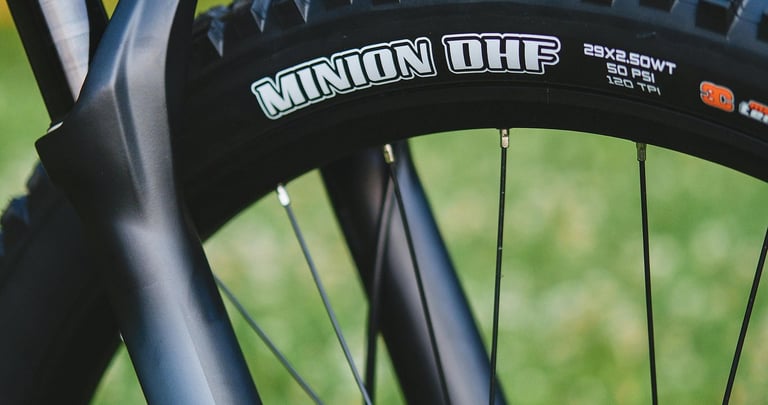
The performance of a mountain bike is heavily influenced by the tires you choose.
Tires aren’t just a layer of rubber they are your interface with the trail. Handling, traction, and ride comfort are all dictated by tire design, including the compound, width, tread pattern, and even the distribution of knobs. Understanding these factors can make a dramatic difference in how your bike performs across varied terrain.
Tire Compound: Grip vs. Durability
Mountain bike tires come in different rubber compounds, generally categorized as soft, medium, or hard.
Soft compounds provide exceptional grip because the rubber deforms easily to follow the trail’s texture. This is especially advantageous on loose or technical terrain where traction is crucial. The trade-off is increased wear, meaning softer tires tend to last fewer miles.
Medium compounds aim to balance grip and durability, making them ideal for all-around trail use.
Hard compounds last longer and resist cuts and abrasions, but they offer less grip, particularly in wet or loose conditions.
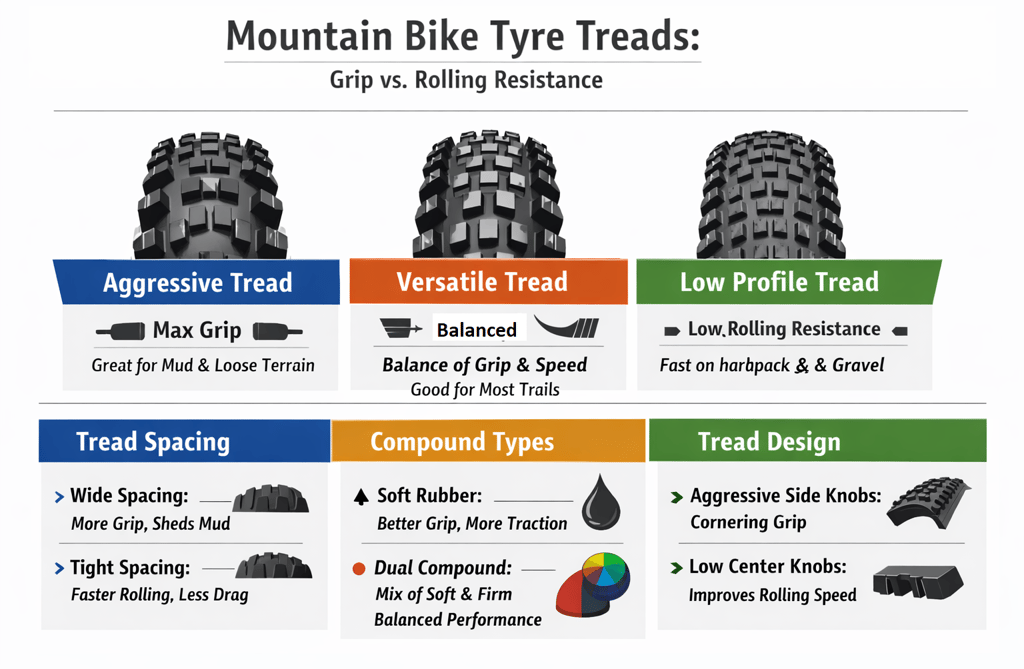
Some tires also use dual or triple compounds, placing softer rubber on the edges for cornering grip and harder rubber in the center for efficiency on straights. This kind of compound layering allows riders to get the best of both worlds: cornering control and rolling speed.
Tire Width: Stability and Floatation
Tire width significantly affects handling:
Narrow tires (1.9–2.2 inches): Faster rolling and lighter weight, but less surface contact means less grip and stability on loose terrain.
Medium tires (2.3–2.5 inches): Offer a balance between speed and traction. They’re versatile for cross-country and trail riding.
Wide tires (2.6 inches and above): Provide more floatation, better grip, and improved stability, especially in soft dirt or rocky terrain. Wider tires are ideal for aggressive riding, enduro, and downhill, but they can be heavier and slower to accelerate.
Width also affects air pressure tuning: wider tires allow lower pressures, which improves traction and comfort but increases rolling resistance slightly.
Tread Pattern and Knob Design
The tread of a tire is arguably the most critical factor in how a mountain bike handles. The design of the knobs—both their shape and distribution—determines how a tire grips, sheds mud, and reacts under braking or cornering.
Knob Distribution
Center knobs: Control rolling resistance and braking traction. Closely spaced center knobs roll faster on hardpack, while taller or more aggressive center knobs provide better braking on loose terrain.
Side knobs: Influence cornering. Widely spaced, pronounced side knobs dig into the trail for better grip in turns. Soft side knobs increase bite in corners but can wear faster.
Knob spacing: Tires with widely spaced knobs shed mud more easily because there’s room for debris to escape. Closely spaced knobs can clog in wet conditions, reducing traction.
Mud Collection and Release
Mud is a notorious challenge for mountain bikers. Tires designed to resist mud accumulation usually have:
Tall, widely spaced knobs: Prevent mud from packing between knobs.
Tapered or curved knobs: Encourage mud to roll off as the tire rotates.
Open side patterns: Ensure that cornering grip is maintained even when the center is partially clogged.
Some tires feature self-cleaning designs, which are particularly useful for wet, loamy trails. Tires that fail to release mud quickly can become heavy and lose traction, severely affecting handling.
Handling Differences on the Trail
When you combine these variables, you can see how tire choice drastically changes bike handling:
A soft compound, wide, aggressive-knobbed tire excels in loose, technical terrain, offering maximum grip and stability in corners.
A hard compound, narrow, tightly packed knob tire rolls fast and is suited to dry, hardpack trails but struggles in mud or loose soil.
Tires that balance center and side knobs allow for confidence under braking, efficient rolling, and controlled cornering on mixed trails.
Essentially, every design choice is a trade-off: grip vs. speed, traction vs. rolling resistance, mud-shedding vs. wear longevity. Understanding these dynamics allows riders to select the tire best suited for their terrain and riding style.
Conclusion
Mountain bike tire performance is a combination of compound, width, tread, and knob design.
Riders seeking precise handling must consider the terrain, weather, and riding style.
Modern tires are engineered to meet specific demands, from mud-shedding, technical trails to fast, hard-packed tracks.
By understanding these nuances, you can choose tires that optimize grip, control, and overall trail performance for the type of trails you ride and to suite your individual riding style.