Thermoplastic Hybrid Steel-Carbon Composite
Is this Carbon-Aramid Composite "FEATHER®" by REIN4CED the future of mountain biking.
ARTICLESNEW
1/7/20263 min read
Beyond the Snap
The Steel-Infused Hybrid Set to Retire Traditional Carbon
For decades, the high-performance world has been trapped in a love-affair with carbon fibre. We loved the weight, the stiffness, and the speed, but we lived in constant fear of the "snap." One misplaced rock or a heavy-handed mechanic, and your prized possession was reduced to a pile of expensive, non-recyclable splinters.
But a quiet revolution is happening in materials science, and it’s replacing the brittle fragility of the past with a new "super-material": Thermoplastic Hybrid Steel-Carbon Composite or Carbon-Aramid Composite as its also known by Belgian based company REIN4CED has completely changed the way carbon composite frames are made, and has double the impact resistance compared to standard carbon.
The "Safety Net" You Can’t See
Imagine a material that has the soul of carbon but the bones of a tank. To the naked eye, it looks like standard high-end composite, but hidden inside the weave is a secret weapon: Inox steel microfibers.
These aren't chunky wires; they are thousands of hair-thin steel threads integrated directly into the carbon layup. In a traditional frame, an impact causes a crack to spread instantly, like a windshield shattering. In this hybrid, the steel fibers act as a structural safety net. They absorb the energy, bridge the gap, and keep the structure intact. The result is a material that doesn't just fail; it "tough-it-outs," offering up to 200% more impact resistance than the carbon we’ve grown used to.
The Science of "The Melt"
The real magic, however, isn't just the steel—it’s the "glue."
Standard carbon uses Thermoset resins. Think of it like baking a cake: once the batter is in the oven and the chemical reaction happens, you can’t turn it back into flour and eggs. If it breaks, it’s trash.
This new hybrid uses Thermoplastics. This is more like chocolate: you can melt it, shape it, let it harden, and then—years later—melt it down and start over. This shift from chemistry to physics changes everything. Because the material is "tough" rather than "brittle," it dampens vibration better and handles the chaotic reality of high-speed impacts without breaking a sweat.
The Rise of the Robots
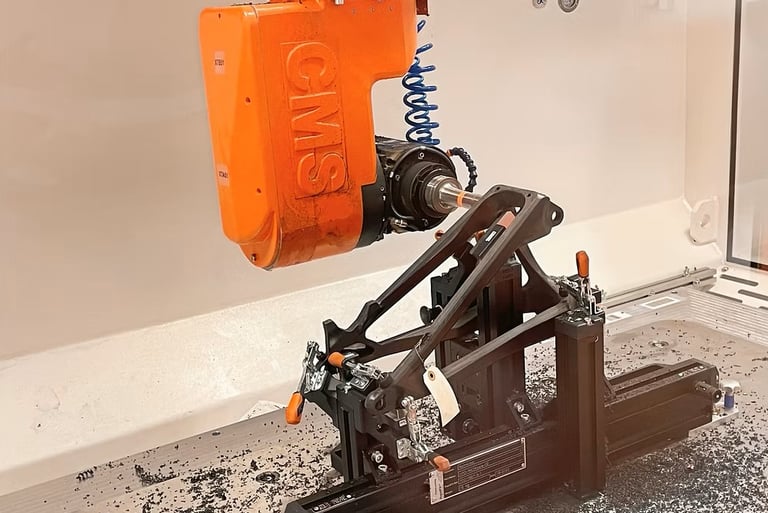
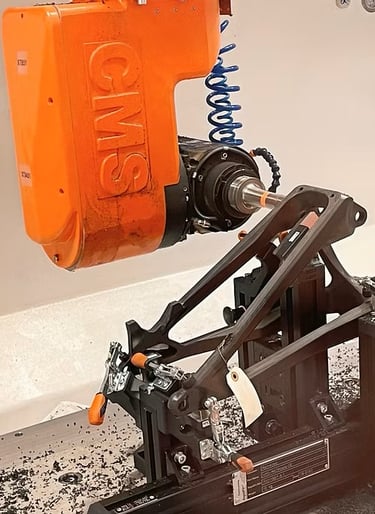
You won’t find a room full of people hand-laying these sheets into moulds. Because this hybrid requires surgical precision and specific thermal cycles, it is born in high-tech, robotic facilities.
Robotic arms layer the steel and carbon with a level of accuracy a human hand simply can't match. This eliminates the "hidden defects"—the tiny air bubbles or misaligned layers—that often lead to mystery cracks in traditional carbon. It’s engineering without the guesswork.
A Greener Finish Line
Perhaps the most refreshing part of this story is what happens when the ride is over. For the first time in the high-performance era, "carbon" doesn't have to mean "landfill."
Because the thermoplastic binder can be reheated, the material is fully recyclable. Old frames and components can be ground down and reborn as new parts. It’s a rare moment where the fastest, toughest material on the market also happens to be the one that’s best for the planet.
The Verdict
We are witnessing the end of the "fragile" era. By weaving the DNA of steel into the lightness of carbon, and swapping permanent glues for recyclable polymers, the industry has finally found the Holy Grail: a material that’s as fast as the future, but as tough as the old days.