
The Carbon Rebel
The Wild, Weird Story of Guerrilla Gravity’s Attempt to Replace Traditional Carbon
ARTICLESNEW
1/9/20264 min read
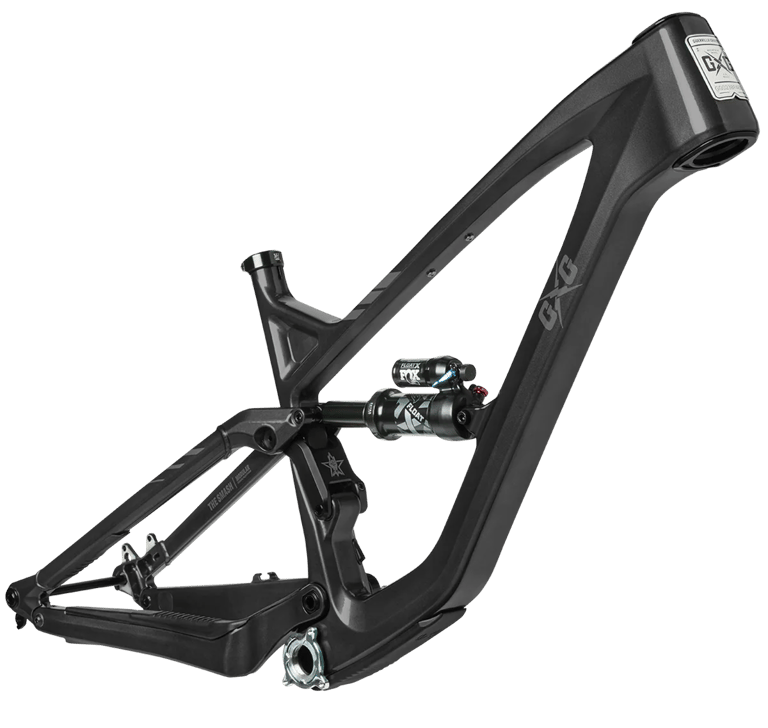
The Carbon Rebel
The Wild, Weird Story of Guerrilla Gravity’s Attempt to Replace Traditional Carbon
Carbon fiber has always had a reputation problem.
To some riders, it’s the holy grail—light, stiff, race-ready perfection. To others, it’s suspiciously expensive black magic held together by marketing, epoxy, and hope.
And for years, both camps sort of had a point.
Traditional carbon came with baggage. It was hard to recycle, energy-intensive to produce, and wrapped in an aura of fragility, whether deserved or not. Plenty of riders still whispered the same old line in parking lots and trailheads:
“Looks great… until you hit a rock.”
Then along came Guerrilla Gravity, kicking down the workshop door like a company that had been raised on espresso and bad ideas that somehow worked.
And instead of asking how to make carbon lighter or stiffer or marginally more compliant—because apparently the bike industry can never have enough adjectives—they asked something much stranger:
What if we replaced the way carbon works altogether?
That question became Revved Carbon, Guerrilla Gravity’s thermoplastic composite material and manufacturing process, and for a brief, fascinating moment, it looked like the company might have stumbled onto something genuinely disruptive.
Not a better version of normal carbon.
A different species entirely.
Carbon, But Make It Rowdy
Most carbon frames are made using thermoset resins—layers laid up, cured, finished, painted, polished. It’s a long, expensive process, and not exactly famous for graceful end-of-life options.
Guerrilla Gravity looked at that system and basically said:
Nope.
Their Revved process used thermoplastic composites fused in much shorter manufacturing cycles, with dramatically less finishing and, critically, the possibility of a more recyclable material pathway than traditional carbon offered.
Now, that may sound like something only a composites engineer would care about.
But it mattered.
Because buried inside all that manufacturing talk was a much bigger idea:
What if carbon didn’t have to be so disposable?
That was the real provocation.
Not “here’s a greener frame.”
More like:
What if the whole material system could be rethought?
Then They Made It Tough. Really Tough.
This is where the story gets gloriously Guerrilla Gravity.
Because they didn’t stop at sustainability.
They also decided their new material should behave less like precious race jewelry and more like something you’d actually want to smash through a rock garden.
The company made big claims—famously touting dramatically higher impact resistance than conventional carbon.
And yes, mountain bikers reacted exactly how mountain bikers react to big claims.
With skepticism.
With side-eye.
With someone immediately saying, “I’d still ride aluminum.”
But even skeptics had to admit the idea was compelling.
Carbon that wasn’t trying to feel delicate.
Carbon that wasn’t asking to be protected.
Carbon that wanted to get hit.
That was new.
That was weird.
And weird, in this industry, is often where interesting things begin.
The Powder-Coated Carbon Frame. Yes, Really.
And then things got even stranger.
Because Revved could handle powder coating.
A powder-coated carbon mountain bike frame.
Read that again.
It sounds fake.
It sounds like something someone invents in a forum argument at 2 a.m.
And yet there it was.
Real.
Ridable.
And somehow perfectly in character.
Of course Guerrilla Gravity would be the company to look at carbon fiber and think, “You know what this needs? Powder coating.”
It was absurd.
It was brilliant.
It was very GG.
This Was Sustainability Without the Lecture
That may be what made the whole thing feel so refreshing.
Revved never came across as sustainability wrapped in corporate beige language.
It wasn’t “our pathway toward future environmental stewardship.”
It wasn’t a 47-page ESG PDF nobody reads.
It was:
We think carbon can be made differently.
We think it can last longer.
We think it can waste less.
We think it can take a hit.
That’s a much more interesting conversation.
Because sustainability, at its best, doesn’t always arrive wearing a halo.
Sometimes it shows up disguised as durability.
Sometimes it looks like supply-chain simplification.
Sometimes it looks like a weird powder-coated frame built by rebels in Colorado.
And Then… It Ended
Which makes the ending sting a little.
Because Guerrilla Gravity shut down before Revved could fully prove what it might have become.
And that feels unfair.
The oddballs are not supposed to leave early.
They’re supposed to stick around long enough to be vindicated.
But innovation rarely follows neat story arcs.
Sometimes the company disappears.
And the idea survives.
And honestly, that may be exactly what happens here.
Because once a brand shows carbon can be approached differently—less brittle, less wasteful, less conventional—you can’t unsee that possibility.
The question has been asked.
And questions, once loose in an industry, have a habit of lingering.
Why It Still Matters
Guerrilla Gravity didn’t just try to improve carbon.
They challenged the assumptions around it.
That’s rarer than it sounds.
Most brands optimize.
A few experiment.
Very few try to rewrite the material itself.
GG did.
And even if the company is gone, that ambition still feels alive.
Somewhere in a lab, or a startup, or a skunkworks project at a bigger manufacturer, there is almost certainly someone still chasing the same thought:
What if carbon doesn’t have to work the way we’ve always accepted?
That was Guerrilla Gravity’s question.
And it remains a very good one.
Even now.
Especially now.