The Carbon Conundrum
Why Mountain Biking’s Most Advanced Material Might Be Its Least Sustainable.
ARTICLES
5/8/20246 min read


Why Mountain Biking’s Most Advanced Material Might Be Its Least Sustainable.
There’s something amazing about a carbon fibre frame.
You can feel it the moment you pick one up.
The hollow quietness, the unexpected lightness, the subtle sense of precision engineering.
Carbon has a way of making a bike feel alive. Reactive. Capable. Almost too good to be true. And yet, behind all that performance lies a story we don’t tell very often.
It’s the story of a material born from intense heat and chemistry, shaped in energy-hungry factories, difficult to recycle, and almost impossible to dispose of.
A material that has transformed mountain bike design and, by extension, transformed the environmental footprint of our sport. Carbon fibre is the ultimate paradox. It lets us ride farther, climb higher, descend faster but it also leaves scars on the planet that might last far longer than any one bike frame.
So let’s dive into the real impact of carbon fibre in mountain biking: how it’s made, why it’s so hard to recycle, what alternatives exist, and whether the benefits outweigh the environmental costs.
A Material Built to Perform… at a Cost
Carbon fibre feels futuristic, but the process behind it is surprisingly brute-force.
At the most basic level, it begins with a polymer—usually polyacrylonitrile (PAN). This material is stretched, heated, oxidized, carbonized, and baked at temperatures approaching 1,500°C until only long chains of pure carbon remain. These are spun into tows, woven into sheets, impregnated with epoxy, cured in molds, trimmed, sanded, polished, painted.
By the time a finished frame comes out of a mold, the environmental cost has already been paid:
high heat
high energy
petrochemical feedstocks
chemical resins
lots of waste material
and very little recyclability
Carbon fibre isn’t inherently “bad.” It’s just industrially intense.
And the mountain bike industry runs a lot of that intensity every year.
Why We Fell in Love With Carbon
It’s worth reminding ourselves why carbon became the default for high-end bikes.
1. Strength-to-weight ratio
Nothing else comes close. Not aluminium, not steel, not titanium. Carbon gives engineers freedom.
2. Tuneable stiffness
Layup patterns allow designers to tailor compliance. Want a vertically soft but laterally stiff rear triangle? Easy with carbon, nearly impossible with metal.
3. Complex shapes
Carbon can form forms metal can’t—organic curves, asymmetric stays, hollow structures.
4. Marketing momentum
Let’s be honest: carbon sells. A “carbon upgrade” is baked into modern bike culture.
And for many riders, carbon really does elevate the experience. But the question lurking behind the stoke is:
At what environmental cost?
The Lifecycle of a Carbon Bike: What We Don’t See
Let’s break the environmental footprint down into its major stages.
1. Raw Material Production
This is the big one.
PAN production relies on acrylonitrile—a petrochemical.
Carbonization uses extreme heat.
Resin production requires additional petroleum and chemicals.
Producing carbon fibre emits several times more CO₂ per kilogram than producing aluminium or steel.
It’s like taking the environmental impact of a whole bike and front-loading it before you’ve even started assembly.
2. Manufacturing the Frame
Carbon frame production is labor-intensive and waste-generating.
Offcuts get thrown away.
Failed layups get tossed.
Mould release agents and solvents are used.
Resin drips, flash, and imperfections all become waste.
Workers often handle materials under conditions that lack strict oversight in some factories.
A high-end frame can use kilograms of carbon sheets—but create almost as much scrap in the process.
3. Shipping and Globalization
Most carbon MTBs come from:
Taiwan
China
Vietnam
Cambodia
The frames then travel halfway around the world.
Carbon itself is light, but the logistics behind it aren’t.
4. The “Use” Phase
(Easily the most sustainable part)**
Once the bike is built, carbon’s environmental footprint stabilizes.It won’t rust. It won’t degrade. It lasts a long time if treated well.
But when that lifespan ends…
5. End of Life: The Hard Part
This is where carbon becomes a problem.
Unlike aluminium or steel, carbon fibre:
cannot be melt-recycled
cannot be easily separated from resin
cannot be composted
cannot be burned cleanly
does not naturally break down—ever
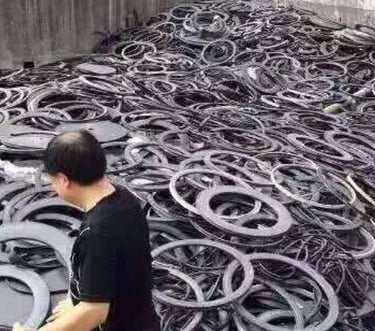
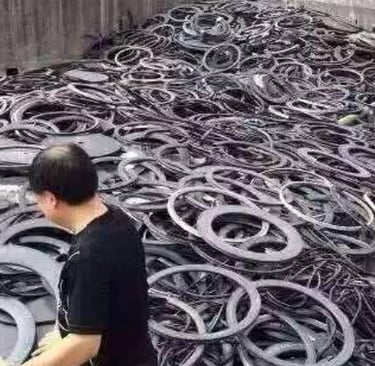
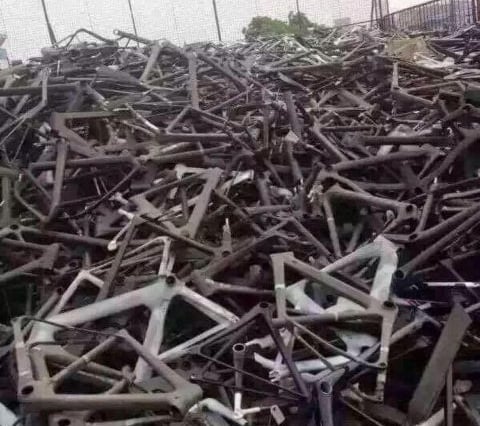
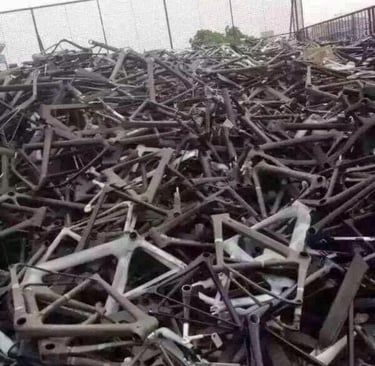
Most carbon frames end up in landfills.
Some recycling programs do exist, but what they produce is chopped fibre that becomes filler in low-grade materials—not new frames.
This is the “downcycling trap.” Once a carbon fibre bike dies, it never becomes another carbon fibre bike.
What Happens When a Carbon Frame Fails?
A cracked carbon chainstay isn’t like a dented aluminum tube. Repair is possible, but many riders don’t consider it. Shops often suggest replacement. Insurance sometimes insists on it.
This leads to:
premature disposal
higher cumulative environmental cost
more frames in landfills
more demand for new carbon frames
Carbon’s weakness isn’t strength—it’s lack of repair culture.
That’s starting to change, but slowly.
Are There More Sustainable Ways to Make Carbon?
Surprisingly, yes. The future actually looks promising.
1. Recycled Carbon Fibre (rCF)
Old fibres can be reclaimed using pyrolysis or solvolysis. They aren’t as strong as virgin carbon, but they’re suitable for:
rims
seatposts
cockpit components
non-load-bearing sections of frames
2. Bio-based Resins
Some companies have started using plant-derived epoxies. They reduce total petrochemical use but still require carbon fibre reinforcement.
3. Low-energy carbonization
Experimental processes use less heat and fewer emissions—but they’re not widespread yet.
4. Bamboo-carbon hybrids
Bamboo grows fast, is renewable, and pairs surprisingly well with carbon to reduce the volume of synthetic material needed.
5. Fully recyclable thermoplastic carbon fibre
A really exciting frontier. Unlike current thermoset resins, these can be re-melted and reused.
This could be a game-changer—if the industry adopts it.
The Elephant on the Trail: Do We Actually Need Carbon?
This is where the conversation gets interesting. Do all riders need carbon? No. Do many of us want carbon? Absolutely.
But sometimes the trade-offs are worth considering:
Aluminium
nearly infinitely recyclable
strong and predictable
modern hydroforming is very advanced
slightly heavier, but far greener
Steel
easy to repair
super durable
recyclable
heavier and less stiff, but soulful and long-lasting
Titanium
expensive
extremely durable
highly recyclable
a lifetime material
The most sustainable bike isn’t always the lightest—it’s the one that stays out of the landfill longest.
Riding Responsibly: What We Can Do Right Now
Sustainability doesn’t have to be paralyzing. Small changes matter.
1. Don’t retire a frame for cosmetic issues
Paint chips aren’t structural.
2. Repair, don’t replace
Carbon repair specialists are now common, affordable, and effective.
3. Buy frames you plan to keep
A carbon bike kept for a decade is far more sustainable than a new alloy frame every two years.
4. Support brands with transparent manufacturing
The more we reward sustainability, the faster the industry evolves.
5. Sell or donate older frames
Extending a frame’s life is the easiest way to reduce its overall footprint.
6. Consider aluminium if you’re hard on gear
Better to dent alloy once than trash two carbon frames in the same period.
The Future: Can Carbon Ever Be Sustainable?
There’s something hopeful happening in the industry. Companies are starting to rethink the entire carbon cycle:
greener raw materials
lower emissions production
repairable construction
recyclable thermoplastic matrices
reclaimed fibre integration
local manufacturing to reduce shipping
modular designs for easier end-of-life separation
The idea of a “cradle-to-cradle” carbon bike—one that can be reborn, not buried—isn’t science fiction anymore.
We’re just not there yet.
A Final Thought
Carbon fibre brought mountain biking into a new era. It helped create bikes that climb like XC machines but descend like DH rigs. It enabled linkages, geometries, structures, and stiffness profiles that simply weren’t possible before.
But performance always comes with a cost.
The question now isn’t whether carbon is good or bad it’s whether we can continue using it without compromising the very landscapes we ride on.
If the next decade of innovation can make carbon as sustainable as it is strong, then maybe just maybe we’ll get to enjoy its ride qualities without the environmental hangover.
Until then, the best thing we can do is ride what we own, repair what we can, and think a little harder about the materials that bring our joy to life on the trail.