Rethinking Brake Fluids
Is there a way to use greener brake fluids
ARTICLES
1/9/20265 min read
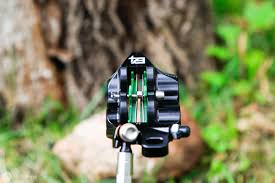
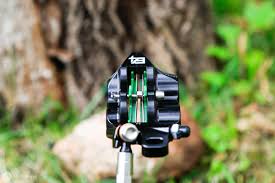
Hydraulic brakes have become almost inseparable from modern mountain biking. They’re powerful, consistent, and reliable in ways that cable systems simply never were. But all that stopping power comes with a hidden environmental cost: brake fluid.
It’s a small detail that most riders never think about—after all, you only need a few millilitres to bleed a system—but across the global industry, this adds up to a surprising amount of chemical waste. And as the mountain bike world has grown explosively over the past two decades, so has the volume of hydraulic fluid we collectively manufacture, ship, spill, and eventually dispose of.
This has led to a growing question inside the bike industry and among environmentally conscious riders:
Is it actually viable to swap manufacturer-recommended brake fluids for more environmentally friendly alternatives?
The answer, as with most things in mountain biking, is “it depends.” But the conversation is long overdue—and more interesting than many riders realize.
What’s Actually in Our Brakes?
Bicycle brake systems use two very different families of fluid, and this distinction is the most important part of the whole debate:
1. DOT (glycol-based) brake fluids
These are similar to what you’d find in cars and motorcycles. They’re highly effective but chemically aggressive, hygroscopic (they absorb water), and can be toxic to the environment. Many brands historically used DOT, especially on gravity and DH bikes.
2. Mineral-oil brake fluids
These are petroleum-based, non-hygroscopic, generally less caustic, and often touted as more environmentally friendly (though “mineral oil” does not automatically mean “green”). Shimano and Magura are the biggest names using this type.
The catch?You absolutely cannot interchange the two.
Their chemistry is different, and so are the brake seals designed for them. Mixing them can destroy a brake system.
So any “green” alternative needs to be compatible with a specific brake family—not a universal drop-in replacement.
Eco-Friendly Brake Fluids That Actually Exist
What many riders don’t realize is that several companies already produce biodegradable or low-toxicity hydraulic fluids. Some are designed specifically for bikes and even approved by major manufacturers.
A few of the most notable options:
• Trickstuff Bionol
A plant-based, fully biodegradable hydraulic fluid created in Germany. It’s famously used by boutique brake brand Trickstuff and is compatible with many mineral-oil systems. Riders love it for its eco-credentials and high performance.
• Magura “Royal Blood”
Magura’s signature blue mineral oil is biodegradable and paint-safe. Magura is one of the few major brands openly marketing the environmental benefits of its fluid.
• Motorex Biodegradable DOT 4
For riders stuck with DOT systems, Motorex has developed a more environmentally responsible DOT 4 fluid that meets biodegradability standards while still performing like a traditional DOT formula.
• Smaller European hydraulic-oil suppliers
There are several niche companies producing plant-oil-based hydraulic fluids for small machinery and bicycles. Many of these focus on low toxicity and rapid biodegradation and can be used in Shimano/Magura-style mineral-oil systems.
The takeaway is that sustainable hydraulic fluid isn’t science fiction—it’s already here.
The challenge is knowing when you can use it safely.
Is Switching Safe or Realistic?
In mineral-oil systems, switching to an eco-friendly mineral-oil alternative is often perfectly viable.
Trickstuff Bionol and Magura’s own oil prove you can have high performance without a heavy environmental footprint.
DOT systems, unfortunately, are more complicated.A DOT brake needs DOT fluid—full stop.But within the DOT category, some brands now offer more biodegradable or less toxic formulas, which still represents a meaningful improvement.
For both systems, the limiting factor is almost always manufacturer warranty and seal compatibility, not the performance of the fluid itself. Many companies legally require using their exact fluid, even if an alternative is chemically identical.
Still, the momentum is shifting. As climate awareness grows and the industry experiments with greener options, it’s likely we’ll see more biodegradable mineral oils and more environmentally responsible DOT formulas enter the mainstream.
How Much Brake Fluid Does the MTB World Actually Use?
It’s easy to assume brake fluid waste is negligible. After all, a typical bleed uses maybe 20–30 ml. But when you zoom out to a global scale, the numbers look very different.
Industry market estimates suggest:
Roughly 15 million hydraulic brake units are sold each year.
A full hydraulic system uses 50–100 ml of fluid.
Add bleeds, top-ups, manufacturing waste, and shop usage.
When you run the math, the mountain bike world likely consumes somewhere between:
1 to 2.25 million litres of brake fluid every year.
That’s over a million litres of oil, glycol, additives, and chemicals entering the environment through:
manufacturing emissions
transport and packaging
spills during bleeding
old fluid discarded improperly
leaking systems in the wild
Mineral oil can be harmful to aquatic life. DOT fluids are even worse—more caustic, more toxic, and longer-lasting in ecosystems unless disposed of properly. For a sport built around celebrating nature, it’s a contradiction that deserves far more attention.
Two Decades of Growth, Two Decades of Increasing Fluid Use
Twenty years ago, hydraulic disc brakes were a luxury found mostly on high-end downhill bikes. Fast forward to today, and even entry-level hardtails come with hydraulic discs.
Alongside this technological shift:
The global mountain bike market has grown from a few billion dollars in the mid-2000s to well over $10 billion today.
Hydraulic brakes have become the industry standard, even in commuter and e-bike segments.
E-MTB growth alone has dramatically increased demand for hydraulic braking systems and fresh fluid.
More riders + more bikes + more hydraulic systems = bigger environmental footprint.
Cable-based systems, once the norm, have been pushed to the margins. And with their decline went one of the simplest ways to avoid brake fluid altogether.
Are Mechanical Brakes an Eco-Friendly Alternative?
Mechanical disc brakes aren’t dead—they’ve just been overshadowed by their hydraulic cousins. But from a sustainability perspective, they deserve a second look.
If you think that cable disk brakes don't provide the level of performance provided but hydraulic brakes, then think again.
The Klamper cable disk brakes from Pauls and others like them are re-defining how mountain bikers view cable brakes.
https://www.paulcomp.com/shop/components/brakes/disc-brakes/flat-mount-klamper/
Environmental advantages of cable
systems:
No brake fluid—no spills, no disposal.
Less maintenance complexity (no syringes, tubing, single-use bleed kits).
Cables are mostly metal and highly recyclable.
Long-term reliability means fewer shop visits and fewer consumables.
Downsides:
They typically can’t match the power or modulation of hydraulics.
They require more regular adjustment.
Performance in wet or steep conditions is noticeably worse.
Still, for commuters, bikepackers, entry-level riders, and eco-conscious cyclists, mechanical brakes remain a practical, lower-impact option. If the industry invested in modernizing cable systems the way it has hydraulics, the sustainability payoff could be huge.
Where Do We Go From Here?
Making mountain biking sustainable isn’t going to hinge on a single component or innovation. But adopting greener brake fluids—and rethinking whether we even need hydraulic systems for certain categories of bikes—is an easy, meaningful step.
A few practical shifts could make a big difference:
Expanding the range of biodegradable mineral oils compatible with mainstream brakes
Encouraging brands to approve eco-friendly third-party fluids
Providing proper disposal programs at bike shops
Developing next-gen mechanical disc brakes with improved power and feel
Encouraging riders to make informed choices based on the environmental trade-offs
The mountain bike world has always been forward-thinking and open to new ideas. With millions of litres of brake fluid flowing through the industry each decade, now is the time to channel that innovation toward greener braking solutions.
After all, we ride in forests, mountains, deserts, and coastlines. It only makes sense that our choices should help preserve the places we love to explore.