
Dirt, Dust, and Second Chances
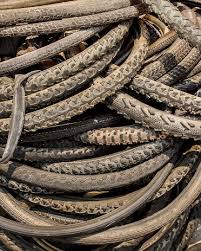
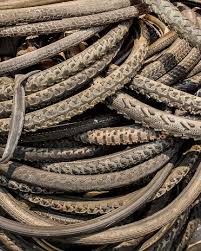
Dirt, Dust, and Second Chances:
Trek’s Tire Recycling Idea Is Actually Kind of Brilliant
Mountain bikers will spend an astonishing amount of time debating tire compounds, casing stiffness, sidewall protection, rolling resistance, and whether a particular tread pattern is “too draggy for summer hardpack.” But ask what happens to a worn-out tire after it’s been peeled off the rim, and the answer has usually been less sophisticated.
It goes in the garage.
Then maybe the shed.
Then, if we’re honest, it becomes a dusty black rubber fossil hanging from a nail for six years.
That’s exactly the problem Trek Bicycle decided to tackle with its used tire collection program—a sustainability initiative that sounds modest on paper but addresses one of mountain biking’s messier blind spots.
Because mountain bike tires don’t exactly disappear.
They pile up.
The Graveyard in the Garage
Every rider has one.
The “I might use this someday” tire pile.
There’s the one with the torn sidewall you swore you’d boot and reuse. The mud tire from 2018. The semi-slick experiment that lasted two rides. And, somehow, a completely bald rear tire you keep moving from one workbench corner to another like an heirloom.
Trek looked at this deeply unserious but very real waste stream and asked a practical question:
What if bike shops became collection points instead of tire graveyards?
That’s the heart of the initiative. Riders bring worn-out tires back to participating Trek retailers, where they’re collected and diverted into recycling streams instead of heading to landfill.
Simple.
Suspiciously simple, even.
And that may be why it matters.
Not Shiny but Important.
Sustainability in cycling often gets marketed through glamorous things—lower-carbon aluminum, exotic bio-based materials, carbon accounting, futuristic circular manufacturing.
All worthwhile.
But used tires?
That’s grease-under-the-fingernails sustainability.
It deals with the ugly leftovers.
And frankly, mountain biking has a lot of ugly leftovers.
Tires are complicated products made of rubber compounds, textiles, and additives that have historically been difficult to process at scale. For years, most riders treated them as disposable consumables.
Ride.
Wear.
Replace.
Repeat.
Trek’s move nudges that system in a different direction: ride, wear, return.
That is a much bigger cultural shift than it sounds.
The Unexpectedly Radical Idea of… Not Throwing Things Away
There is something quietly radical in making waste visible.
Once a shop has a tire collection bin sitting near the service counter, every rider suddenly has to confront a question they probably never asked before:
Wait… where should old tires go?
And that moment matters.
Because sustainability often starts not with grand inventions, but with changing habits.
The industry has spent years talking about carbon footprints. Trek, in this case, is also talking about physical footprints—those literal chunks of worn rubber riders leave behind.
And honestly? It’s overdue.
Also, Let’s Admit Tires Are a Problem
Mountain bike tires live hard lives.
They get sliced by shale.
Shredded on brake bumps.
Cooked on uplift days.
Destroyed by the one “shortcut” your friend swore was rideable.
Then we replace them with alarming enthusiasm.
Many riders go through multiple sets a year.
That adds up.
A lot.
Which is why collecting even a portion of those tires starts looking less like a niche recycling gesture and more like meaningful waste reduction.
There’s Humor in This, Too
There’s something very mountain biking about solving an environmental problem by bringing filthy, worn-out, vaguely smelly tires back to the bike shop.
Imagine explaining this to someone outside cycling.
“So what do you do on weekends?”
“I ride into the woods, destroy expensive rubber, then return the carcasses to a retailer for responsible processing.”
Perfectly normal.
Completely sane.
Why This Could Matter Beyond Trek
The real significance of the initiative may not be the number of tires Trek collects this year.
It may be that the idea spreads.
Because once one major brand treats tire waste as a system problem, it becomes harder for everyone else to ignore it.
And that’s often how industry shifts happen.
Not with a moonshot.
With a bin.
A very practical bin full of dead Maxxis carcasses.
The Bigger Picture
No, tire recycling alone will not “save cycling.”
It won’t solve emissions from manufacturing.
It won’t magically fix carbon fiber end-of-life.
It won’t stop you from buying another “slightly faster rolling” rear tire next month.
But sustainability is rarely one heroic fix.
It’s dozens of useful, sometimes unglamorous improvements stacked together.
And in that sense, Trek’s used tire collection program feels refreshingly real.
Less manifesto.
More mechanic.
Less green theater.
More actual dirt under the fingernails.
And for mountain biking, a sport built on dirt in the first place, that feels strangely appropriate.
Sometimes progress looks like breakthrough technology.
Sometimes it looks like finally doing something about the sad pile of dead tires in your garage.
And honestly?
Its About time.